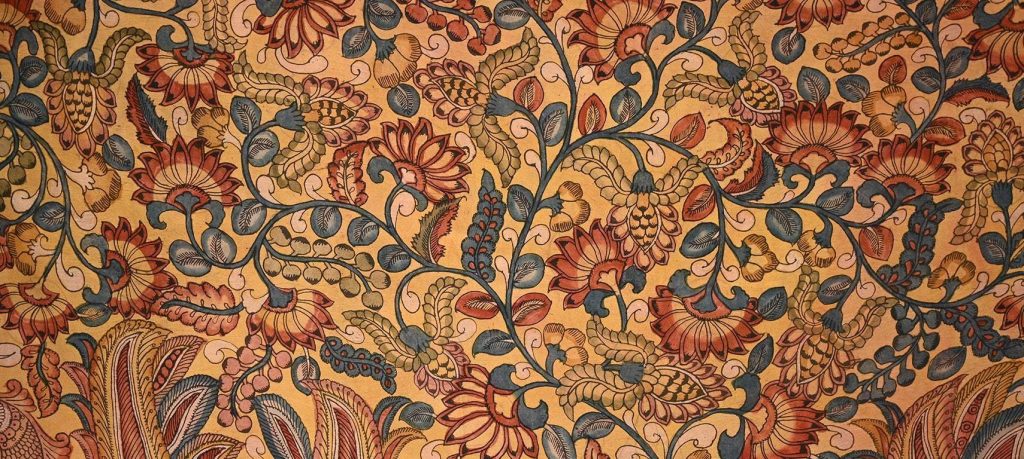
In the heart of India, a timeless art form flourishes, transforming simple cotton into breathtaking canvases of storytelling. Kalamkari, meaning “pen craft,” is not merely a textile; it’s a living legacy, a testament to human patience, artistic skill, and the profound beauty of natural dyes. This ancient tradition invites us into a world where every motif, every color, tells a story deeply rooted in history and nature.
At its core, Kalamkari is a hand-painted or block-printed textile, renowned for its intricate detailing and the exclusive use of natural pigments. Unlike modern synthetic dyes, Kalamkari’s colors are derived from plants, minerals, and other organic sources, yielding an earthy, harmonious palette that is as kind to the skin as it is to the planet. It’s a craft that embodies sustainability long before the term became a global buzzword.
Origins of Kalamkari
The roots of Kalamkari stretch back millennia, echoing through ancient civilizations. Traditionally, chitrakattis – wandering artists, singers, and storytellers – used large, hand-painted fabric scrolls as visual aids to narrate epic tales from Hindu mythology and folklore. This nomadic tradition gradually evolved into the refined art form we recognize today, with specific regional techniques emerging.
The craft truly blossomed under the patronage of various rulers. The Mughal Empire, captivated by its beauty, encouraged its use for regal garments and opulent tent canopies, leading to the development of sophisticated motifs. Later, European traders, particularly the British, were enchanted by its unique patterns, adapting them into popular chintz fabrics that swept across the West. This rich history underscores Kalamkari’s enduring appeal across cultures and centuries.
Two Distinct Expressions: Srikalahasti and Machilipatnam
While both share the “pen craft” spirit and reliance on natural dyes, Kalamkari manifests in two primary, distinctive styles:

Source: Singhanias
Originating near the revered temple town of Srikalahasti, this style is characterized by its purely freehand drawing. Artists meticulously use a kalam (a bamboo pen with a cotton wad) to sketch intricate outlines and fill in details.
The themes are predominantly sacred and mythological, depicting elaborate scenes from the Ramayana, Mahabharata, and images of Hindu deities, often created as temple hangings or devotional art. The process is a meditative journey, involving up to 17 labor-intensive steps.
The Machilipatnam Style (The Block-Printed Pattern):

Source: Sooti Syahi
Developed in Machilipatnam, a historic port town, this style incorporates hand-carved wooden blocks for outlining and filling larger areas. The kalam is reserved for finer embellishments.
This approach gives the Machilipatnam style a more structured, repetitive, and often geometric aesthetic. Designs frequently feature floral motifs, vines, paisleys, and influences from Persian art, making them highly versatile for apparel and home furnishings.
Creation of Kalamkari fabric
Regardless of the style, the creation of Kalamkari is a symphony of natural processes, requiring immense patience and skill:
- The cotton fabric undergoes rigorous cleaning, bleaching, and softening. It’s then treated with myrobalan fruit, which acts as a natural mordant, preparing the fabric to absorb the dyes.
- In Srikalahasti, the kalam draws outlines with a fermented mixture of jaggery and iron filings, creating a rich black. For Machilipatnam, meticulously carved blocks apply the base outline.
- The fabric is repeatedly washed in running water (traditionally river water), dried under the sun, and sometimes treated with milk or cow dung solution to bind the colors.
- Colors are applied in stages. Red, derived from madder root, is typically applied first. This is followed by blues from indigo, then yellows, greens, and other shades from a variety of natural sources like pomegranate peels or turmeric. Each color application demands a separate wash and drying cycle.
- Natural mordants, like alum, are crucial for reacting with the fabric and the dyes, ensuring the colors are vibrant, permanent, and do not bleed.
- The process culminates with final washes and treatments that enhance the fabric’s softness and sheen.
In an era of fast fashion and mass production, Kalamkari today stands as a powerful symbol of conscious craftsmanship and artistic heritage. It provides sustainable livelihoods for artisan communities and offers consumers a truly eco-friendly product.
Far from being confined to museums, Kalamkari has gracefully adapted to modern sensibilities. Its intricate patterns and earthy tones adorn contemporary fashion, from elegant sarees and flowy dresses to chic scarves and stoles. In home decor, Kalamkari bedspreads, cushion covers, and wall art infuse spaces with unique cultural charm.
To own a piece of Kalamkari is to connect with a story that has spanned millennia, a technique passed down through generations, and a dedication to art that honors nature. It’s an investment in beauty, history, and a sustainable future.



 The Namahh Edit
Leave a comment