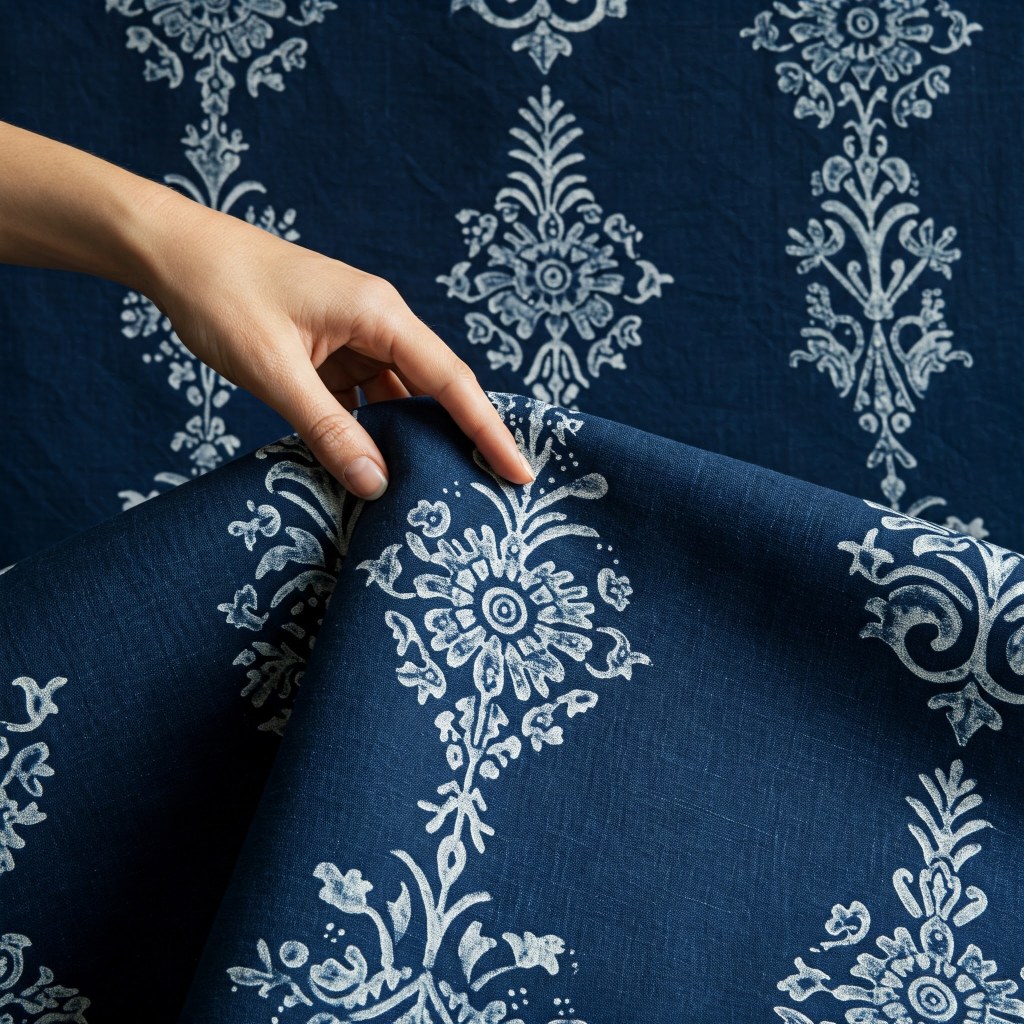
There’s something captivating about the color indigo. It’s a blue that feels both ancient and timeless, the shade of a twilight sky just before the stars pop out.
What happens when that rich, soulful blue meets the skilled hand of a European artisan? The answer lies in Blaudruck, a centuries-old tradition of resist-printing fabric in rich blues. The practice gained prominence in the 17th and 18th centuries, as knowledge of indigo dyeing and resist techniques spread across the continent.
Blaudruck wasn’t just about adding color to cloth; in many communities, specific designs became closely linked to regional identity and even family traditions. Certain motifs, a particular arrangement of tiny white stars against the inky blue, might tell you which village someone came from, or even hint at their family history. It was a versatile textile, used for everything from everyday clothing and bedding to special occasion wear.
The core of Blaudruck lies in its resist-dyeing method. Artisans carefully carve their designs into wooden blocks, maybe a scattering of delicate wildflowers, a bold geometric border, or a symbol carrying a meaning known within their community. The designs are often carved using pear wood. These blocks can range in size depending on the complexity and scale of the pattern.

Image Source: European Textile Academy
Next comes the resist, a paste made from ingredients like clay and resin, and linseed oil is applied to the fabric using that carved block. Each press is deliberate, imprinting the pattern that will eventually stand out in crisp white against the deep blue. Then comes the transformation: the fabric is dipped, again and again, into vats of indigo dye. Unlike some dyes that take to fabric in one go, indigo is a slow reveal. With each dip and breath of air, the blue deepens, clinging to the fibers where the resist hasn’t touched. It’s a patient process, a testament to the dyer’s understanding of their craft.
Once the dyeing is complete, the resist paste is washed away, revealing the lighter pattern against the deep blue background. It’s a moment of quiet triumph, the culmination of skill and time. You can almost feel the texture of the fabric, the slight stiffness from the dye, the contrast between the smooth blue and the slightly raised areas where the resist was.
The patterns themselves are a journey through European folk art. You might see the cheerful repetition of a simple polka dot, the elegant swirl of a stylized vine, or the comforting symmetry of a geometric border. In some regions, you’d find bold, almost abstract designs, while others favored intricate florals that spoke of the surrounding countryside. These weren’t just random decorations; they were often imbued with meaning, connecting people to their heritage and their land.
While the roar of industrial looms might have quieted many traditional crafts, Blaudruck is whispering its way back into our consciousness. There’s a growing appreciation for things made by hand, for the stories woven into the fabric itself. You can find dedicated workshops keeping the old traditions alive, with their artisans deeply connected to the knowledge passed down through their families. And you see designers taking inspiration from these ancient patterns, giving them a fresh voice in modern clothing and homes.
In 2018, UNESCO recognised Blaudruck on its list of intangible cultural heritage of humanity. So, the next time you see a piece of Blaudruck, take a moment to look beyond the blue and white. Imagine the hands that carved the blocks, the slow immersion in the dye, the stories held within the patterns. It’s more than just fabric; it’s a tangible piece of European history, dyed in tradition and printed with soul.


 The Namahh Edit
Leave a comment