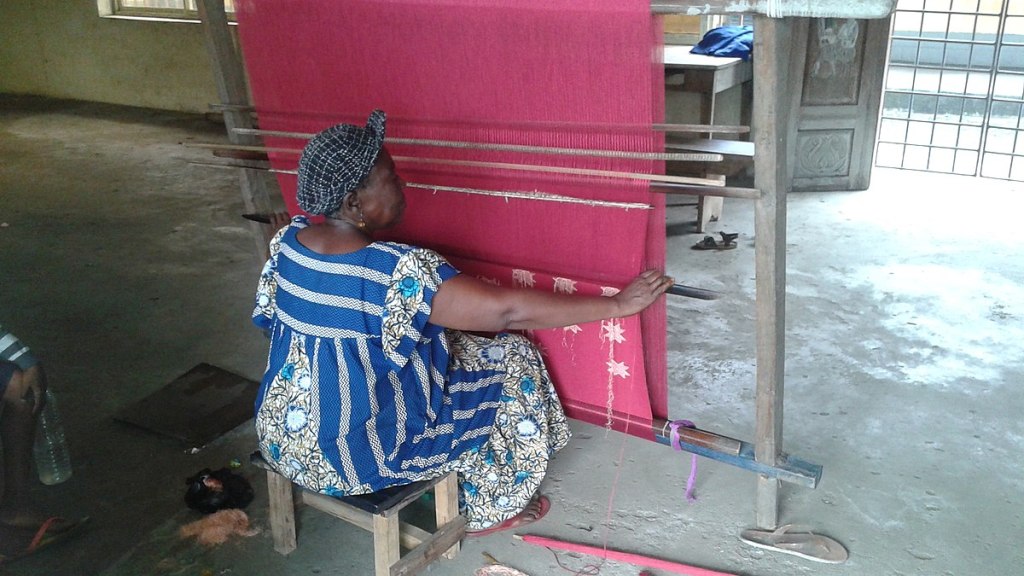
Akwete textile is more than just a fabric; it’s a canvas upon which the Igbo people have woven their history, beliefs, and aspirations. The intricate patterns and vibrant colors often represent specific cultural symbols, such as the sun, moon, and various deities. Each motif carries a unique meaning, passed down through generations.
For instance, the “Umunna” pattern, featuring interlocking circles, symbolizes family and unity. The “Oji” pattern, with its bold stripes, represents authority and leadership. These patterns are not merely decorative; they are a form of communication, a way for the Igbo people to express their identity and values.
Despite its cultural significance, Akwete textile has faced numerous challenges in recent decades. The advent of mass-produced, synthetic fabrics has posed a threat to its traditional market. Moreover, the availability of natural dyes and raw materials has dwindled, making it increasingly difficult for weavers to maintain the authenticity of their craft.
However, Akwete weavers have shown remarkable resilience. Many communities have organized cooperatives to promote and preserve the tradition. Additionally, efforts are being made to modernize production methods while maintaining the fabric’s unique character. Some weavers have experimented with incorporating modern materials and designs, creating contemporary interpretations of the Akwete aesthetic.
Its vibrant colors, intricate patterns, and sustainable qualities have made it a sought-after material for both high-end fashion houses and independent designers.
Many African designers such as Lisa Folawiyo and Christie Brown, have been at the forefront of incorporating Akwete into their collections, showcasing its beauty and versatility to a global audience. Some Western designers have also embraced Akwete, often using it as a statement piece or to add a unique touch to their designs.
The future of Akwete textile is promising. As more people recognize its cultural value and aesthetic appeal, the demand for this unique fabric continues to grow.




 The Namahh Edit
Leave a comment